
Introduction
Shravan Maas 2026, the sacred Hindu month devoted to Lord Shiva, is almost here, and devotees across India are already preparing for a month of fasting, temple visits, and devotion. In North India, which follows the Purnimanta calendar, Shravan begins on Thursday, July 30, 2026, and concludes on Friday, August 28, 2026. This calendar is followed in Uttar Pradesh, Bihar, Rajasthan, Punjab, Madhya Pradesh, Chhattisgarh, Jharkhand, Himachal Pradesh, Uttarakhand, and Delhi.
In states that follow the Amanta calendar, including Maharashtra, Gujarat, Goa, Karnataka, Andhra Pradesh, Telangana, and Tamil Nadu, Shravan begins about two weeks later, on Thursday, August 13, 2026, and ends on Friday, September 11, 2026. The gap between the two calendars is not a discrepancy; it simply reflects two equally valid ways of tracking the lunar month, one ending on the full moon (Purnimanta) and the other on the new moon (Amanta).
Whichever calendar your region follows, the devotion, the fasting, and the spirit of Shravan remain the same. Read on for the complete 2026 dates, the story behind why this month is so dear to Lord Shiva, and how you can mark the season with festive Shravan Maas posters and social media content using Brands.live.
Why Shravan Maas Is Dear to Lord Shiva
According to scriptures and Puranic legend, after the self-immolation of Sati, Adishakti was reborn as Parvati. To win Lord Shiva as her husband, she undertook intense penance during the month of Shravan and was eventually granted her wish. This is why Shravan is remembered as the month of the divine union of Shiva and Parvati, and why it holds such a special place in Shiva’s heart.
Download Unlimited Festival Posts, Videos, WhatsApp Stickers & Many More



Another popular legend ties the month to the Samudra Manthan, the churning of the cosmic ocean. When the deadly Halahal poison emerged and threatened all of creation, Lord Shiva consumed it to protect the universe, and the Devas poured Ganga water over him to cool the effect of the poison. Devotees continue this tradition today through Jalabhishek, the ritual offering of water to the Shivling, which is considered one of the most powerful forms of worship performed throughout Shravan.
When is Shravan Maas 2026?
Shravan Maas 2026 falls on different dates depending on which Hindu calendar your region follows. In North India (Purnimanta calendar — Uttar Pradesh, Bihar, Rajasthan, Punjab, Madhya Pradesh, Chhattisgarh, Jharkhand, Himachal Pradesh, Uttarakhand, and Delhi), Shravan runs from Thursday, July 30, 2026 to Friday, August 28, 2026. In South and West India (Amanta calendar — Maharashtra, Gujarat, Goa, Karnataka, Andhra Pradesh, Telangana, and Tamil Nadu), Shravan begins two weeks later, from Thursday, August 13, 2026 to Friday, September 11, 2026. This isn’t a discrepancy — Purnimanta months end on the full moon, Amanta months end on the new moon, and both track the same lunar cycle. Whichever calendar applies to you, the fasting, temple rituals, and devotion to Lord Shiva remain the same throughout the month.
Shravan Maas 2026 Somwar (Monday) Fast Dates
Region | Sawan Start Date | Sawan End Date | Shravan Somwar Count |
|---|---|---|---|
North India | 30 July 2026 | 28 August 2026 | 4 Somwars (Aug 3, 10, 17, 24) |
Gujarat | 13 August 2026 | 11 September 2026 | 4 Somwars (Aug 17, 24, 31, Sep 7) |
Maharashtra | 13 August 2026 | 11 September 2026 | 4 Somwars (Aug 17, 24, 31, Sep 7) |
South India | 13 August 2026 | 11 September 2026 | 4 Somwars (Aug 17, 24, 31, Sep 7) |

How to Download Shravan Maas Marketing Content from Brands.live
Follow these simple steps to get your Shravan Maas content ready in minutes:
Step 1: Visit Brands.live
Open the Brands.live website on your browser. Make sure you have a stable internet connection for a smooth experience.
Step 2: Log In or Create an Account
If you already have an account, simply log in with your credentials. New users can sign up quickly by entering their details and verifying their email.
Step 3: Go to the Shravan Maas Campaign Section
Once logged in, use the search bar or browse through the festival categories to find the Shravan Maas section, where you’ll find a curated collection of posters, banners, greeting cards, and templates.
Step 4: Select, Customise, and Download
Browse through the available Shravan Maas templates, images, and videos. Pick the design that fits your campaign’s theme, use the built-in AI poster maker free tools to customize text, colours, and branding, then click Download to save it to your device.
Key Festival Dates in Shravan Maas 2026
- Sawan Shivratri: August 11, 2026 — devotees observe a full-day fast and perform Rudrabhishek through all four prahars of the night.
- Hariyali Amavasya: August 12, 2026 — dedicated to ancestral worship (Pitru Tarpan) and tree planting, celebrating the greenery of the monsoon.
- Hariyali Teej: August 15, 2026 — a festival of adornment and marital blessings, observed mainly by women.
- Nag Panchami: August 17, 2026 — coincides with the third Sawan Somwar this year, making it an especially auspicious confluence.
- Raksha Bandhan (Shravan Purnima): August 28, 2026 — marks the end of Shravan in North India.
These dates apply to the North Indian Purnimanta calendar. In Amanta-calendar states, the equivalent observances fall roughly two weeks later, in line with the region’s own Shravan start and end dates.
The Spiritual Significance of Shravan
Coinciding with the monsoon, Shravan is considered one of the most spiritually charged months of the year. Devotees believe that Somwar fasts and Sawan Shivratri puja performed during this period bring blessings of health, wealth, and harmonious relationships. It is a time for spiritual renewal, self-discipline, and deepening one’s connection with the divine, whether through daily Jalabhishek, chanting the Maha Mrityunjaya Mantra, or the Kanwar Yatra pilgrimage that many devotees undertake through the month.

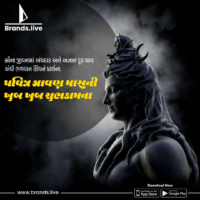
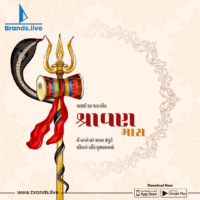
Celebrate Shravan Maas 2026 with Brands.live
Make this Shravan Maas memorable for your brand and community with Brands.live, your go-to festival poster maker for creating stunning, on-brand festive content in minutes. Whether you need a quick social media post or a fully branded campaign, Brands.live has you covered.
With Brands.live, you get access to:
- A free festival poster maker online, built specifically for Indian festivals and occasions
- A ready-to-use Social Media Post Maker for Instagram, Facebook, and WhatsApp
- An AI poster maker free tool that generates fresh designs in seconds
- Ready-to-use Shravan Maas Poster designs for every day of the month
- Beautifully crafted Shravan Maas Templates you can customise instantly
- Elegant Shravan Maas Greeting Card designs to share devotion with your audience
- Eye-catching Shravan Maas Festival Banner options for shops, offices, and social pages
Every design can be customised with your brand logo, colours, and message — helping you engage your audience with powerful, festive visuals all through the sacred month.
Let's Enjoy the FAQ Session!
The month of Shravan holds special significance in Hinduism. Considered auspicious, devotees fast, perform rituals and offer prayers to Lord Shiva. It is believed that worshiping in this month brings blessings, spiritual growth and fulfillment of desires.
Fasting is done in Shravan as a form of devotion and penance. It is believed that fasting during this month purifies the mind, body, and soul, and brings blessings from Lord Shiva. It is a way to show dedication, seek divine grace, and attain spiritual growth and inner peace.
Brands.live offers customizable templates, posts and scheduling features to create and share content related to the month of Shravan, such as prayers, devotional messages and festive greetings.
Yes, Brands.live offers a collection of Shravan-themed templates that businesses can customize with their own messages and branding elements to create visually appealing posts and promotions.
Brands.live offers a 7-day trial for just ₹1. You can explore all the features during the trial period and decide if it’s the right fit for your business.
Shravan Maas 2026 runs July 30 – August 28 in North India and August 13 – September 11 in South/West India, due to the two calendar systems (Purnimanta vs. Amanta).